My criteria for this list: the property must hold at least one credible third-party sustainability certification (LEED, Green Globe, Rainforest Alliance, or an equivalent national certification with equivalent rigour); it must source a minimum of 60% of its food locally; it must employ local staff at all levels; and it must be able to clearly explain what it does with its environmental impact. Greenwashing operators — all flash, no substance — need not apply.
1. Earthship Biotecture Resort
Taos, New Mexico, USA
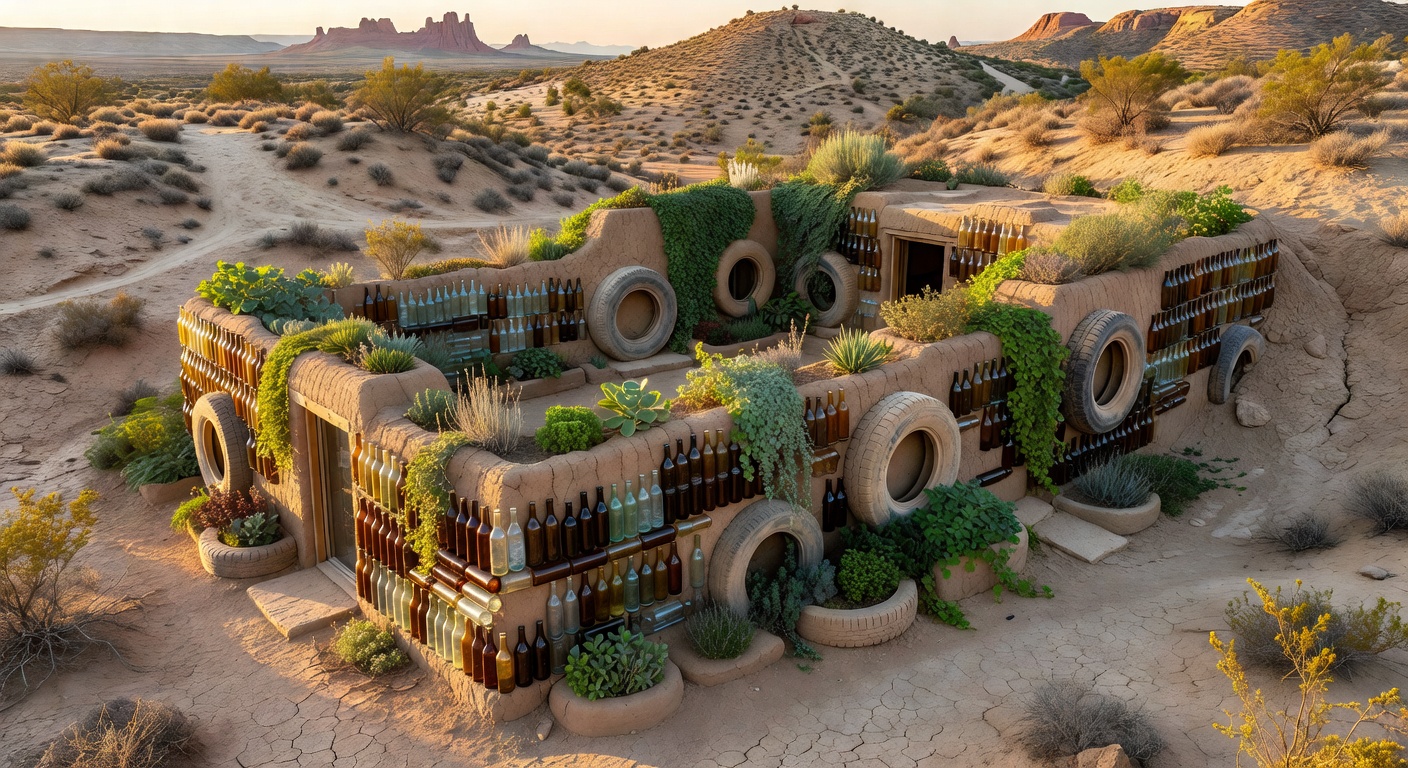
Earthships are not hotels that happen to be sustainable. They are a radical reimagining of what a building can be: structures built from used tyres packed with rammed earth, glass bottle walls that filter light into spectrum-rich indoor gardens, and solar and wind systems that make connection to the grid unnecessary rather than supplementary. The Taos complex — birthplace of the earthship movement — offers guest accommodation in several of these extraordinary structures.
Staying in an earthship is an education in passive solar design: the south-facing greenhouse wall traps heat in winter and feeds a succession of edible plants year-round. The greywater system cycles washing water through a sequence of indoor and outdoor planters before returning it to the ground. Nothing is wasted. Everything cycles. The experience is genuinely revelatory — not comfortable in a conventional hotel sense, but deeply stimulating in ways that most conventional hotels are not.
The resort has achieved LEED Platinum certification for its communal spaces and is energy net-positive: it produces more energy from solar and wind than the guest accommodation consumes. Tours of the building techniques run daily and are included in the room rate.
Strengths
- Completely off-grid — net positive energy
- Educational immersion in sustainable building
- Unique architecture unlike anything else
- Outstanding passive heating and cooling
Trade-offs
- Bathroom aesthetics are functional, not luxurious
- Limited on-site dining options
- Remote location requires a car
2. The Mekong Sanctuary Houseboat
Luang Prabang Province, Laos
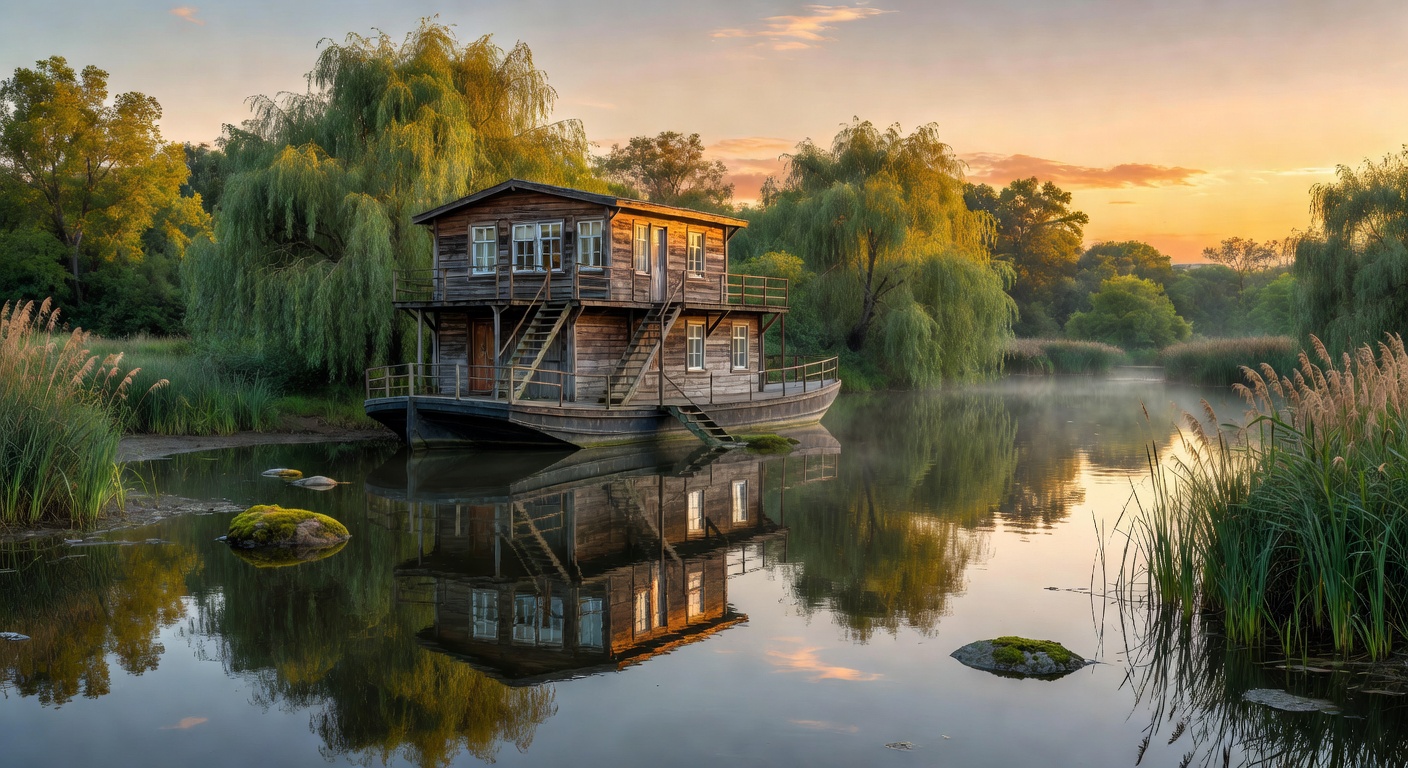
The Mekong Sanctuary operates two traditionally-crafted wooden houseboats on the upper Mekong River, north of Luang Prabang. They are among the most atmospheric accommodations in Southeast Asia: low-slung teak decks, hand-woven fabric interiors, solar panels powering a discreet but effective air conditioning system, and a kitchen that sources everything from the riverside villages the boats pass through on their three-day slow cruises.
The sustainability credentials here are less about dramatic technology and more about economic and cultural responsibility. The boats are built and maintained by local Lao craftspeople using traditional construction methods. The cook on each vessel buys exclusively from local families, maintaining relationships with specific farmers and fishermen along the river route. Guides are drawn from the Khmu and Hmong communities whose villages line the river banks, ensuring that their ecological knowledge — accumulated over generations — is the primary resource being sold to visitors.
Green Globe certification covers the operation's waste management, water use and community engagement commitments. The on-board composting system processes all food waste, and the houseboats run on solar power supplemented by a small biofuel generator that uses waste cooking oil as fuel.
Strengths
- Exceptional community economic integration
- Unmatched river scenery and cultural access
- Beautifully crafted traditional interiors
- Zero single-use plastics onboard
Trade-offs
- Humid; air conditioning is effective but audible
- Three-day minimum booking
- Limited connectivity (a feature for most guests)
3. Bambu Indah Resort
Ubud, Bali, Indonesia
Bambu Indah is many things simultaneously: a luxurious retreat, an architecture showcase, a working organic farm and a living demonstration of what bamboo construction can achieve at its most ambitious. The resort's iconic Javanese antique houses — sourced from across the archipelago and painstakingly reassembled on a jungle hillside above the Ayung River — sit alongside more recent structures built entirely from bamboo, demonstrating the material's capacity for both warmth and engineering sophistication.
The sustainability programme here is genuinely comprehensive. The property generates 70% of its electricity from solar panels integrated into bamboo-framed pergola structures throughout the grounds. Greywater is treated through a constructed wetland before being used for garden irrigation. The kitchen grows over 60% of the produce consumed on-site, with the remainder sourced from organic farms within 20 kilometres. The on-site bamboo nursery propagates species used both in construction and reforestation projects in the surrounding watershed.
Rainforest Alliance certification covers the property's land management, biodiversity commitments and supply chain practices. The resort's founder is a genuine bamboo evangelist whose workshop programme teaches guests the basics of bamboo construction — a surprisingly engaging way to spend a morning.
Strengths
- Architecturally extraordinary — genuinely unique
- Exceptional farm-to-table dining programme
- Well-integrated sustainability across all operations
- River valley setting of rare beauty
Trade-offs
- Premium price point narrows accessibility
- Ubud's increasing development visible from some rooms
- Bamboo insulation means tropical sound permeates
4. Lapa Rios Wilderness Ecolodge
Osa Peninsula, Costa Rica
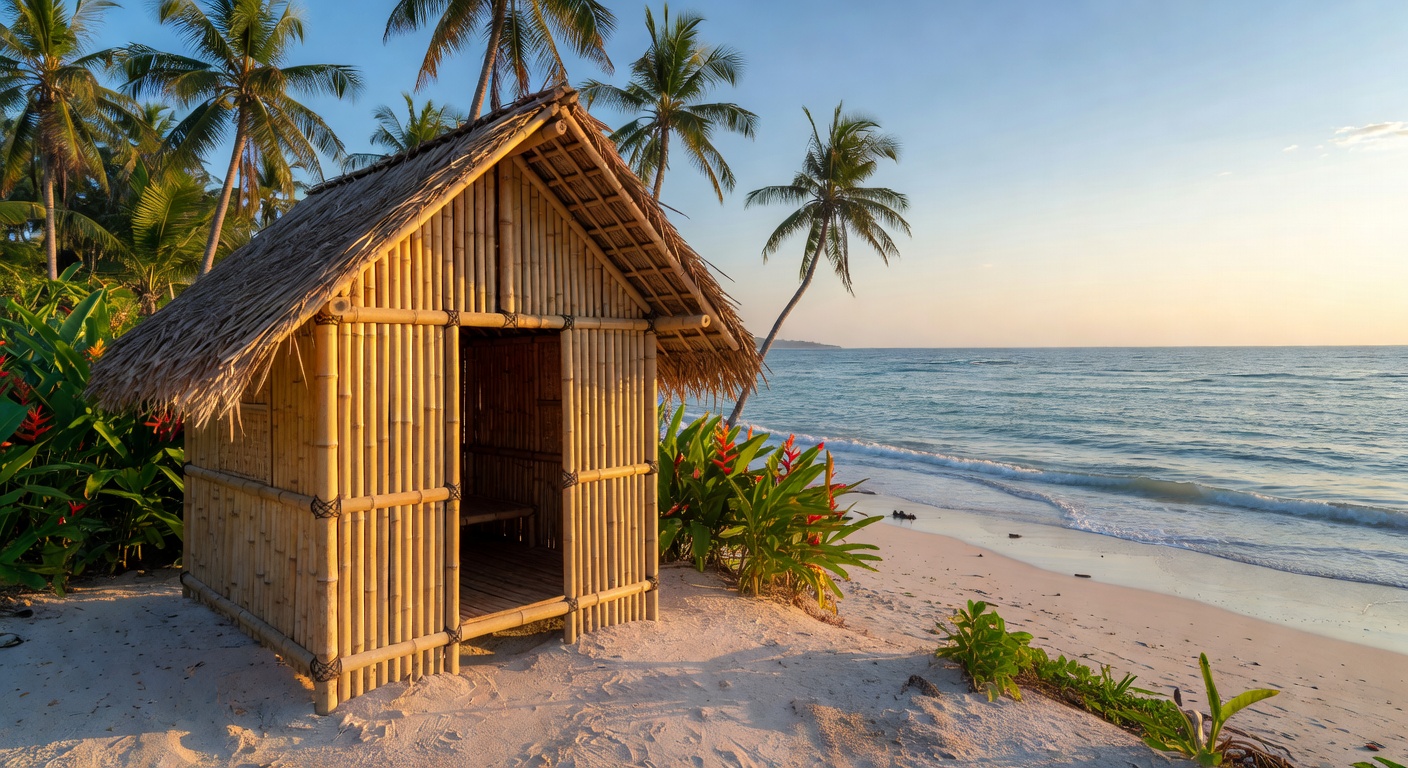
Lapa Rios is the benchmark against which all other jungle eco-lodges should be measured. Established in 1993 on the Osa Peninsula — home to the most biodiverse lowland rainforest outside the Amazon — the property protects 1,000 acres of primary and secondary rainforest as a private reserve, and its operational model has not wavered from its founding sustainability commitments in over thirty years.
The lodge holds Costa Rica's highest CST (Certificate for Sustainable Tourism) rating of five leaves, achieved through genuine performance across energy, water, waste, biodiversity and community engagement — not self-reported claims. Energy comes from a micro-hydro system powered by the adjacent stream. All waste is composted, recycled or returned to San José for specialist processing (Osa Peninsula has no hazardous waste facility). The on-site reforestation programme has planted over 50,000 native trees since the lodge opened. Staff wages are above the national tourism sector average, and the lodge provides healthcare and education benefits.
The wildlife here is extraordinary: scarlet macaws nest in the trees immediately surrounding the bungalows, tapirs regularly visit the waterhole adjacent to the dining sala, and the guided night walk consistently produces encounters with fer-de-lance snakes, sleeping toucans and bioluminescent fungi that genuinely illuminate the forest floor.
Strengths
- Gold standard sustainability credentials, verified independently
- Extraordinary accessible wildlife in primary rainforest
- 30+ years of community and conservation impact
- Outstanding guiding quality
Trade-offs
- Significant investment — one of Costa Rica's most expensive lodges
- Remote location; 4WD and a full day's travel from San José
- Hot and humid year-round; not a climate-controlled experience
5. Treehotel Harads
Harads, Swedish Lapland
Sweden's Treehotel is architecturally one of the most celebrated small hotels in the world. The seven tree rooms — suspended in the pine forest above the Lule River — include designs by some of Scandinavia's leading architects: a mirrored cube that reflects the forest in perfect camouflage, a UFO-shaped pod accessible by a retractable walkway, a bird's nest of woven branches housing a family suite. Each is a work of architectural art as much as an accommodation.
The Nordic Swan ecolabel — one of Europe's most rigorous sustainability certifications — covers the property's energy use (district heating from biomass, supplemented by solar), water systems, chemical-free cleaning programme, and sourcing policy. All food served in the adjacent Homestead restaurant is sourced from within 100 kilometres, including wild game, foraged mushrooms and berries, and cold-water fish from local rivers and the adjacent Baltic coast. The property employs exclusively local staff and works with the Sámi indigenous community on guided traditional knowledge experiences.
Strengths
- Architectural excellence — a genuine design landmark
- Winter aurora and summer midnight sun equally spectacular
- Exceptional hyper-local dining
- Indigenous cultural programme with Sámi community
Trade-offs
- Some tree rooms require physical agility to access
- Needs advance booking (12+ months for peak winter)
- Northern Sweden requires flight or long rail journey
"The best eco hotel you can stay in is the one where the sustainability programme is invisible to guests — because it's been fully integrated into the operation rather than bolted on as a marketing message."
Also Highly Commended
6. Fogo Island Inn, Newfoundland, Canada
Perched on the rocks of Fogo Island off the Newfoundland coast, this architecturally extraordinary hotel was designed as a direct economic development tool for a remote community facing decline after the collapse of the cod fishing industry. Fifty cents of every dollar spent at the inn goes directly to the Shorefast Foundation, which manages the island's community development fund. LEED Silver certified, the building is a masterpiece of contemporary vernacular architecture — all weathered wood cladding, elevated on stilts above the frost-heaved rock, with floor-to-ceiling windows framing views of icebergs drifting past in spring. From USD 1,600 per night — expensive, but the most directly community-beneficial accommodation I have ever stayed in.
7. Grootbos Private Nature Reserve, South Africa
Grootbos protects 2,500 hectares of fynbos — one of the world's most diverse plant communities — on the Cape Peninsula, and its community development programme has created over 300 sustainable livelihoods in the adjacent township of Gansbaai. The lodge's Foundation has built a sports facility, runs a horticultural training programme and operates a marine conservation station. WESSA (Wildlife and Environment Society of South Africa) 5-star rating. Garden suites from USD 620 per night, all-inclusive of exceptional guided fynbos and marine experiences.
8. Longitude 131°, Uluru, Australia
The most luxurious accommodation in Australia's Red Centre, Longitude 131° operates in partnership with the Anangu Traditional Owners of Uluru, ensuring that all cultural interpretation is led by Anangu guides and that the operator's revenue contributes to Traditional Owner royalties and Anangu-controlled cultural preservation programmes. The tented suites are solar-powered and the property holds EcoTourism Australia's highest certification, Advanced Ecotourism, with particular recognition for its cultural engagement model. From USD 1,200 per night twin share.
How to Spot a Genuine Eco Hotel
Before your next accommodation booking, ask these five questions. A genuinely sustainable property will answer all of them readily and specifically:
- What third-party sustainability certification do you hold, and who issues it? (Self-certification is meaningless)
- What percentage of your energy comes from renewable sources on-site?
- Where does your food come from, and can you name specific local suppliers?
- What is your single-use plastic policy?
- What community development or conservation projects do your room rates directly fund?
If the answers are specific, verifiable and accompanied by evidence — certification documents, supply chain maps, project reports — you are likely looking at a genuine commitment. If the answers are vague, promotional or involve phrases like "we try to be as green as possible," look elsewhere.