Aerial view of the Amazon Rainforest canopy stretching to the horizon

Amazon Rainforest

Earth's Greatest Living Laboratory

πŸƒπŸƒπŸƒπŸƒπŸƒ Eco Rating 🌎 South America πŸ“… Best: Jun–Nov 🌑️ 24–32Β°C

The Lungs of the Earth

The Amazon Basin is more than a destination β€” it is a living system of planetary importance. Covering over 5.5 million square kilometres across nine countries in South America, the Amazon Rainforest produces 20% of Earth's oxygen, houses 10% of all species on the planet, and regulates rainfall patterns across entire continents. It is, by any measure, the most ecologically significant wilderness on Earth.

For eco-travelers, the Amazon offers an unparalleled encounter with the living world β€” but visiting responsibly is paramount. The pressures of deforestation, illegal mining, and climate change make every responsible tourist dollar a meaningful act of conservation. When you choose indigenous-led tours, certified eco-lodges, and community-based experiences, you create direct economic incentives for forest protection that no international treaty can match.

10%

of All Earth's Species

5.5M

kmΒ² of Forest

400+

Indigenous Groups

A World of Superlatives

The Amazon River is the world's largest by volume, discharging 20% of all freshwater entering the world's oceans. The forest contains more tree species in a single hectare than exist in all of Europe. The Amazon holds some 390 billion individual trees representing roughly 16,000 species. Its insects, birds, fish, reptiles, and mammals number in the hundreds of thousands of known species β€” with scientists estimating that millions more await discovery.

This is a place where discovery is still possible, where indigenous peoples have lived sustainably for millennia, and where a responsible traveler can witness ecosystems that have remained largely unchanged since the age of the dinosaurs. That privilege carries a profound responsibility to visit with humility, care, and genuine respect.

Regions of the Amazon to Explore

The Amazon encompasses multiple countries and ecosystems β€” each with its own character, wildlife, and responsible travel opportunities.

Brazilian Amazon

Amazonas State, Brazil

Manaus serves as the gateway to Brazil's Amazon β€” the world's largest unbroken stretch of tropical rainforest. The Meeting of the Waters, where the dark Rio Negro meets the sandy Amazon River, is one of nature's most spectacular phenomena. Excellent eco-lodge infrastructure makes this the most accessible Amazon region.

🐬 Pink river dolphins
🌊 Meeting of the Waters
🦜 Amazon Research Institute (INPA)

Peruvian Amazon

Loreto Region, Peru

Iquitos β€” the world's largest city not accessible by road β€” is the entry point to Peru's Amazon, home to some of the most biodiverse protected areas on the planet. The Pacaya-Samiria National Reserve floods seasonally, creating vast mirror lakes where caimans, manatees, and giant otters congregate in extraordinary concentrations.

🦦 Giant river otters
🌿 Pacaya-Samiria Reserve
🌺 World's highest plant diversity

Colombian Amazon

Amazonas Department, Colombia

Leticia, Colombia's southernmost city at the borders of Peru and Brazil, offers extraordinary indigenous community tourism. The Tikuna people lead travelers into forests their ancestors have managed sustainably for centuries, sharing ecological knowledge of medicinal plants, tracking, and forest ecology unavailable anywhere else.

🏘️ Indigenous Tikuna communities
🌱 Amacayacu National Park
πŸ’ Rare primate species

Bolivian Amazon

Beni Department, Bolivia

Bolivia's Madidi National Park has one of the highest biodiversity records ever documented for a single protected area. The Chalalan Ecolodge β€” entirely owned and operated by the Quechua-Tacana indigenous community β€” is a global model for how community-run eco-tourism can simultaneously protect forests and lift people from poverty.

πŸ† Community-owned ecolodge
πŸ† Jaguars and pumas
🦚 Highest bird diversity on record

6 Essential Tips for Amazon Travel

The Amazon demands the highest standards of responsible travel. These guidelines help protect the forest and its people.

Tip 01

Book Indigenous-Led Tours

Indigenous-led experiences ensure your dollars flow directly to forest-dwelling communities who have the greatest stake in protecting it. Organizations like COICA (Coordinator of Indigenous Organizations of the Amazon River Basin) maintain directories of certified indigenous tour operators.

Tip 02

Never Buy Wildlife Products

The Amazon wildlife trade is the world's most lucrative illegal market after drugs and weapons. Never purchase animal products β€” dried piranhas, butterfly wings, jaguar teeth, live animals, or any product made from forest species. Report suspicious vendors to local authorities.

Tip 03

Stay on Designated Trails

Off-trail movement causes severe damage to fragile forest floor ecosystems and can disturb nesting birds, denning mammals, and sensitive plant communities. Stay on marked trails, follow your guide's instructions, and resist the urge to cut through undergrowth.

Tip 04

Carry Out All Your Waste

Plastic waste is catastrophic in Amazon ecosystems where waste collection infrastructure is virtually absent. Bring a lightweight trash bag on every excursion, avoid single-use plastics entirely, and carry a reusable water filtration bottle rather than buying bottled water.

Tip 05

Use Biodegradable Products Only

Sunscreen, insect repellent, and toiletries that enter Amazon waterways can be toxic to fish, amphibians, and aquatic invertebrates. Switch to biodegradable, eco-certified personal care products before your trip β€” your river ecosystem depends on it.

Tip 06

Respect Sacred Indigenous Sites

Many areas in the Amazon have deep spiritual and cultural significance to indigenous communities. Always ask permission before entering villages, photographing people, or approaching ceremonial sites. The Amazon's people are as irreplaceable as its wildlife.

Amazon Wildlife to Look For

The Amazon harbors approximately 10% of all species on Earth. These are some of the most memorable encounters responsible travelers may experience.

Tropical forest filled with biodiversity

Amazon River Dolphin

The pink boto dolphin is one of the world's rarest river dolphins. Spot them at dawn and dusk near river confluences, where they herd fish into shallow water.

Vulnerable
Colorful tropical bird in the Amazon

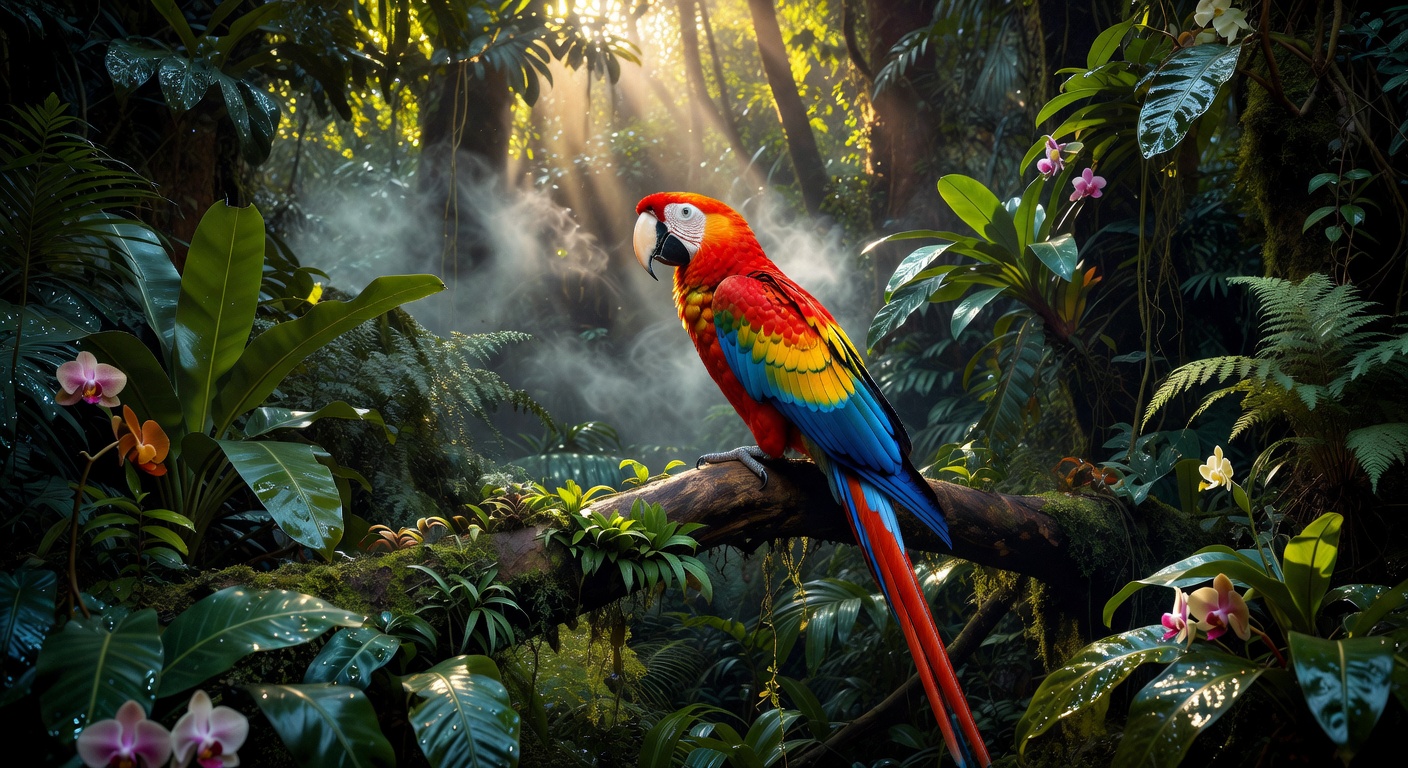
Scarlet Macaw

These vivid crimson parrots are most visible at clay licks β€” exposed riverbank cliffs where hundreds gather to eat mineral-rich soil. A spectacular sight at dawn.

Least Concern
Brilliant morpho butterfly in Amazon rainforest

Blue Morpho Butterfly

With a wingspan up to 20cm and iridescent electric-blue wings, morpho butterflies flash through sun-dappled forest clearings in an unforgettable display of natural beauty.

Least Concern
Colorful forest mushrooms in Amazon undergrowth

Poison Dart Frog

Tiny, jewel-bright, and extraordinarily toxic, Amazonian poison dart frogs advertise their danger with vivid colors. They're found on the forest floor and in bromeliads throughout the canopy.

Vulnerable
Monkey in Amazon rainforest canopy

Howler Monkey

The howler monkey's call β€” one of the loudest of any land animal β€” carries up to 5km through the forest. Often heard before dawn, their resonant roar is the sound of Amazonia.

Least Concern
Dense Amazon forest with diverse flora

Giant Otter

The world's largest otter, reaching 1.8m in length, lives in family groups along Amazon river systems. Charismatic, vocal, and supremely entertaining β€” a highlight of any river expedition.

Endangered

Conservation Efforts in the Amazon

From indigenous land rights to international reforestation funds, conservation in the Amazon is a multifaceted and urgent endeavor.

πŸ›οΈ

Indigenous Land Rights

Studies consistently show that indigenous-managed territories have the lowest deforestation rates in the Amazon. Securing legal land rights for indigenous communities is the single most effective conservation tool available.

πŸ’°

REDD+ Carbon Credits

The UN's REDD+ program enables forest nations to receive payment for keeping forests standing. Carbon credit revenues fund community development, forest patrols, and sustainable livelihood programs for frontier communities.

🌱

Reforestation Initiatives

Brazil's commitment to restore 12 million hectares of degraded Amazon land by 2030 is backed by international funding. Programs like Amazon Sacred Headwaters are using eco-tourism revenue to fund direct replanting of degraded areas.

Stay Informed About the Amazon

Receive the latest Amazon conservation news, responsible travel guides, and community spotlight stories delivered to your inbox.