In 1835, a 26-year-old naturalist named Charles Darwin stepped ashore on a cluster of volcanic islands sitting astride the equator in the eastern Pacific Ocean. What he observed over the next five weeks would eventually transform humanity's understanding of life on Earth. The finches with their differently shaped beaks, the tortoises whose shells varied between islands, the marine iguanas that had learned to dive for algae — all would form the foundations of his theory of evolution by natural selection, published 24 years later as "On the Origin of Species."
Nearly two centuries on, the Galápagos Islands remain one of the most extraordinary places on Earth for a single, awe-inspiring reason: the wildlife here has never learned to fear humans. Giant tortoises lumber across your path. Marine iguanas bask centimetres from your feet. Blue-footed boobies perform their courtship dances within arm's reach. Galápagos penguins rocket past your snorkel mask. Sea lions play with your fins. The experience is utterly unlike any other wildlife encounter on the planet.
Ecuador declared the islands a UNESCO World Heritage Site in 1978 and a Biosphere Reserve in 1984. Today, 97% of the archipelago's land area is protected as a national park. But protection comes at a price — every visitor must follow strict regulations, pay the park entrance fee, and travel with a licensed naturalist guide. This is not a destination for independent wandering. It is a destination for profound, guided, regulated, and deeply respectful wildlife encounter.
UNESCO World Heritage: The Galápagos Islands were among the first 12 sites inscribed on the UNESCO World Heritage List in 1978. The Marine Reserve, established in 1998, covers 133,000 km² of ocean and is one of the largest and most biologically diverse marine protected areas in the world. Compliance with regulations is mandatory — fines for violations are substantial.
Wildlife Encounters
The Galápagos's extraordinary wildlife is the product of millions of years of isolation and adaptive evolution. With no natural predators for most species, the animals developed what scientists call "tameness" — an extraordinary fearlessness around humans that makes these islands unique in the world for up-close wildlife observation.
Giant Tortoises
The archipelago's iconic species — some individuals live over 150 years. Visit the Charles Darwin Research Station on Santa Cruz or walk among free-ranging populations on Isabela Island.
Marine Iguanas
The only marine lizard on Earth. Watch them plunge into the cold Pacific to graze on algae, then return to warm themselves in colonies on black lava rocks — sometimes hundreds together.
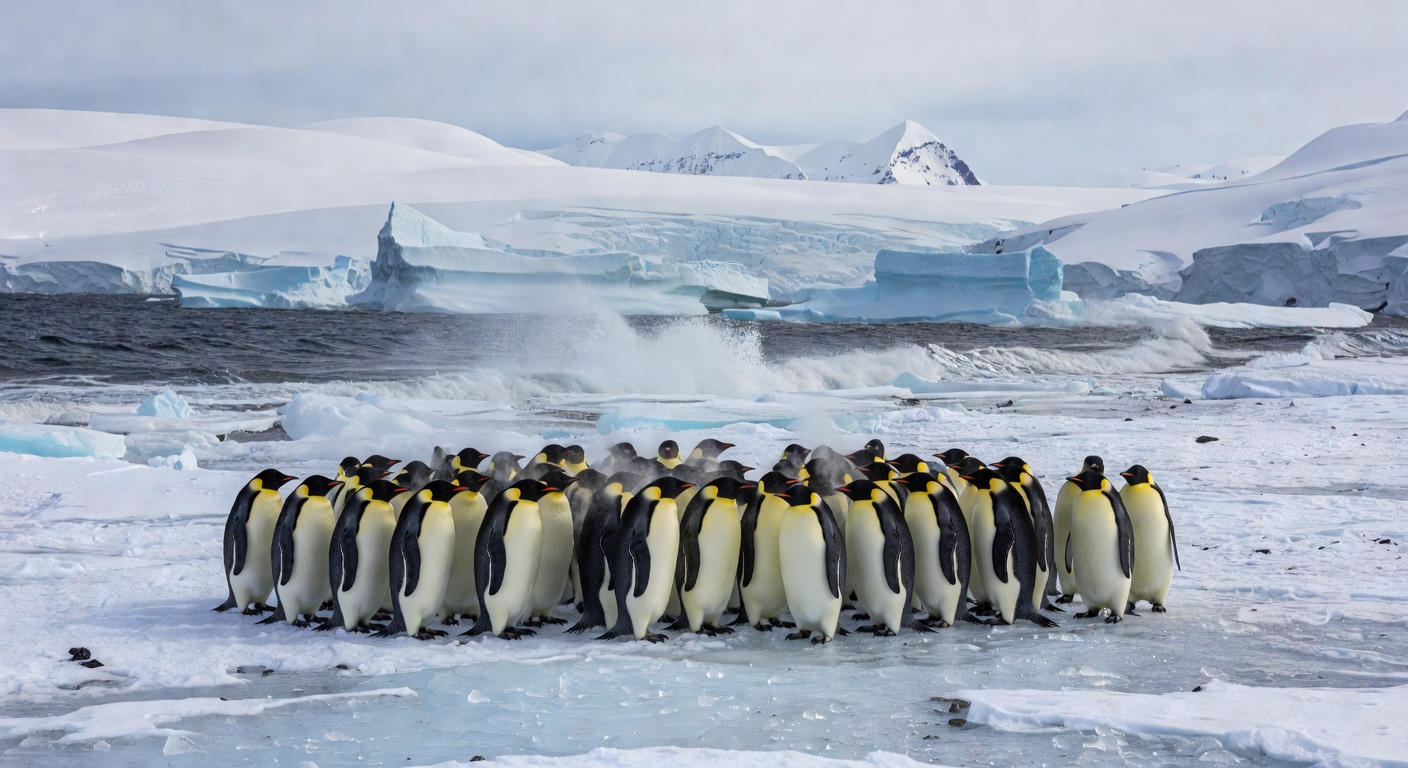
Galápagos Penguins
The only penguins in the Northern Hemisphere. Found mainly around Fernandina and Isabela islands, they are the world's second-smallest penguin species and Endangered.
Blue-footed Boobies
Unmistakable with their vivid turquoise feet, these seabirds perform elaborate courtship dances on land and plunge-dive dramatically into the ocean in coordinated groups.
The Main Islands
Santa Cruz
The most populated island and the gateway to Galápagos. Home to the Charles Darwin Research Station and the Giant Tortoise Breeding Centre. Excellent highland farms where wild tortoises roam freely during wet season.
Isabela
Formed by the merger of six shield volcanoes, Isabela hosts the largest tortoise population and the only Galápagos penguin colony on the equator. The Wall of Tears hike reveals the island's dark colonial history.
Fernandina
The youngest and most volcanically active island in the archipelago, with no introduced species — a glimpse of the Galápagos as Darwin saw it. Home to the world's largest marine iguana colony.
Española
The oldest island in the archipelago. The only breeding site for the waved albatross, which arrives every April. Spectacular cliff-top views from Punta Suárez, with sea lions, marine iguanas, and Nazca boobies.
Conservation Regulations — Non-Negotiable
Never touch any animal. No feeding, no attempting to touch, no selfies with contact. This applies to all species including sea lions who may approach you.
Stay on marked paths at all times. Visitor sites have clearly marked trails. Stepping off paths can damage nesting sites and fragile lava fields.
No food or organic material from outside the islands. All food must be purchased on the islands. Biological contamination from outside species is one of the gravest threats to the ecosystem.
Travel only with licensed naturalist guides. Every visitor to national park areas must be accompanied by a licensed guide. Independent access is not permitted.
No litter or waste. Carry all waste off islands. Never discard anything in the water. All cruise boats must have waste management systems certified by the park authority.
Minimum 2m from all wildlife. Although animals may approach you, you must never advance towards them. If an animal chooses to come near you, stay still and quiet.