Why I Decided to Do This
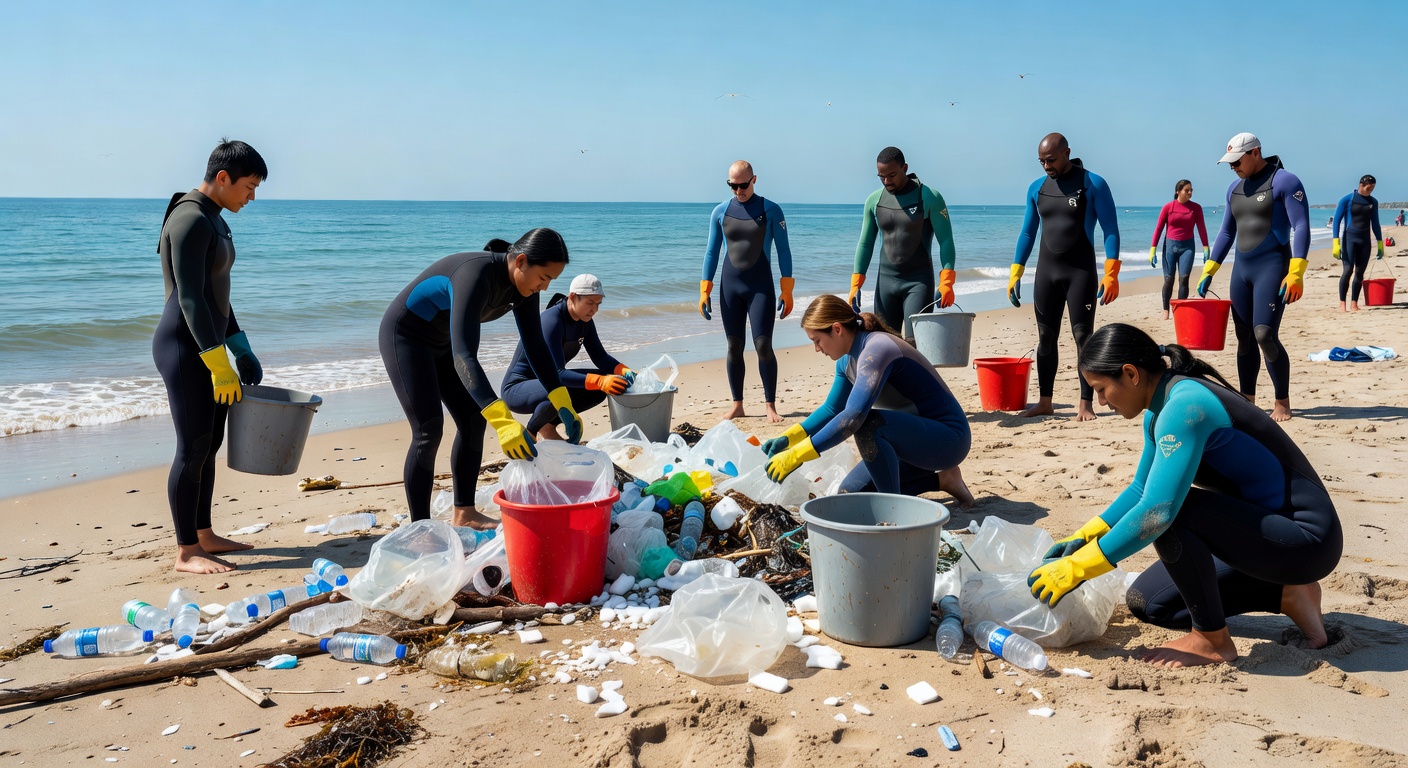
The catalyst was a beach cleanup I joined in Sri Lanka in January 2026. Within two hours, our group of twelve had collected over 340 kilograms of plastic waste — and the vast majority of it bore the branding of international brands sold to tourists. Single-use water bottles. Plastic-wrapped snacks. Laminated maps. The detritus of convenience travel, washing up on one of the most beautiful coastlines in the Indian Ocean.
Standing there with a bin bag in each hand, I made a decision. For thirty days, travelling through three continents — West Africa (Ghana and Senegal), Southeast Asia (Vietnam and Thailand) and South America (Colombia and Ecuador) — I would produce zero landfill waste. Not just reduce my waste. Zero. Whatever I consumed would need to be compostable, recyclable or reused.
I documented every failure. There were many.

The Kit: What I Carried
Before I left, I spent two weeks assembling what I thought of as my zero-waste travel toolkit. I researched everything obsessively. I consulted the excellent guides on zero-waste travel forums, watched too many YouTube tutorials about beeswax food wraps, and eventually settled on the following essentials:
Total kit weight: 1.4 kg. I was proud of this. My smugness would not survive the first airport.
Week One: Accra and Dakar
Accra, Ghana's capital, turned out to be one of the most zero-waste friendly cities I've visited anywhere. The informal market system — still the dominant mode of food retail for most of the city — is inherently low-waste. Vendors sell produce without packaging. You bring your own container or buy directly into a banana leaf. Street food comes in a chunk of newspaper, if it comes wrapped at all. I thrived.
My tiffin containers became my best friends. I carried them everywhere and simply handed them to street food vendors, who invariably found this mildly amusing but entirely accommodating. "The man with the metal box!" became a running joke at my regular breakfast spot in the Osu neighbourhood.
Dakar was similarly manageable — with one significant exception. Airports. The Léopold Sédar Senghor International Airport has no refillable water stations beyond security. I watched my filtered water run out before boarding, spent twenty minutes of increasingly desperate negotiation asking staff if I could refill from a tap (I could, eventually, from the staff kitchen), and nearly capitulated to buying a plastic bottle. I didn't. But it was close.
"Zero waste travel isn't about perfection. It's about building habits and systems that make the less harmful choice the easy choice — for you, and eventually for the infrastructure around you."
Week Two: Hanoi and Hoi An
Vietnam broke me. Not irreparably, but meaningfully. Vietnamese street food — some of the best in the world — is served in plastic bags and styrofoam containers as a matter of cultural default. My refuse cards helped somewhat, but there were meals where the food arrived in plastic before I'd even had a chance to hand over my container. In those moments, I accepted the food (wasting it would be worse), ate it, and carried the container out with me to find a recycling point.
The lesson: zero waste travel is not about refusing to participate in local food culture. It's about creating systems before you order, not after. I learned to arrive at food stalls, open my tiffin container, point to it, and mime the serving action before the vendor reached for their packaging. A small adjustment. A big difference.
Hoi An's ancient town, however, was revelatory. The city has been running a "plastic-free ancient town" initiative since 2022, and the infrastructure shows. Cloth bags are sold at every corner for a few thousand dong, vendors actively prefer them, and the central market has a dedicated waste sorting zone. I could have lived there indefinitely and barely produced a whisker of waste.

Weeks Three and Four: Medellín and the Ecuadorian Coast
Colombia surprised me most. Medellín — once notorious for very different reasons — has quietly become one of Latin America's most environmentally progressive cities. Its integrated public transport system (metro, cable cars and electric escalators connecting hillside comunas) is entirely emission-free, and the city's markets operate a citywide bring-your-own-container discount scheme at participating stallholders. It felt like arriving in the future.
The Ecuadorian coast, where I spent my final week at a community-run eco-lodge near Canoa, was where everything clicked. The lodge composted all organic waste, ran a solar water heating system, and had partnered with a local cooperative to refill guest toiletry bottles rather than provide single-use miniatures. Almost every meal came from the lodge's kitchen garden or from the adjacent fishing village. My tiffin containers sat unused because there was no need for them. It was, I realised, the most complete version of zero-waste travel I'd experienced — not because I'd managed my own behaviour particularly well, but because the infrastructure around me made the right choice effortless.
What Worked
- The LifeStraw bottle eliminated single-use plastic water bottles for 90% of the trip
- Solid toiletries — no leaks, no liquid restrictions, and dramatically less packaging
- Tiffin containers at markets and street food stalls (with early communication to vendors)
- Cloth bags — universally understood and culturally neutral in all six countries
- Digital documentation of everything (receipts, maps, boarding passes) — zero paper waste
- Choosing guesthouses over hotel chains — far more likely to have bulk toiletry dispensers and composting
What Was Genuinely Hard
- Airports: almost universally hostile to zero-waste travel, with inadequate water refill infrastructure
- Pre-packaged airline food: I brought my own food where I could, but some legs made this impossible
- Medication: blister packs, shrink-wrapped boxes, no alternatives — a genuine unsolved problem
- Festive markets and tourist areas: the waste infrastructure simply doesn't match the volume of packaging
- Sunscreen: solid sticks work on exposed skin but are genuinely difficult to apply thoroughly to your back
- Mental load: the constant vigilance is exhausting. Zero waste travel is not yet a passive activity
The Honest Final Count
I did not achieve zero waste. Over thirty days across six countries, I produced the following landfill waste: four boarding pass thermal paper stubs (digital wasn't accepted at two airports), two blister packs of medication, one small plastic bag from a market vendor who acted before I could intervene, and three plastic straws that arrived in drinks before I spotted them. Approximately 180 grams of total landfill waste over thirty days of travel. For context, the average Western tourist produces an estimated 1–1.5 kilograms of waste per day while travelling.
Was it a success? By the numbers, yes. By the experience of actually doing it, it was something more complicated: an education in how much of our waste is systemic rather than personal, and how the most powerful zero-waste choices are often about where you sleep and what systems you support rather than what's in your toiletry bag.
Five Things You Can Do on Your Next Trip
You don't need to do thirty days. Start smaller. These five habits will cut your travel waste by roughly 70% without requiring a significant lifestyle overhaul:
- Carry a filtered water bottle and refuse single-use plastic bottles entirely — this alone accounts for the majority of tourist plastic waste
- Pack solid toiletries: shampoo bar, conditioner bar, solid sunscreen and toothpaste tablets are all available from zero-waste brands and last longer than liquid equivalents
- Bring your own containers for street food and markets — a lightweight stainless tiffin weighs 200g and pays for itself in environmental terms within a day
- Choose accommodation that has bulk soap dispensers rather than single-use miniatures — ask before you book
- Download boarding passes and travel documents digitally wherever possible — not a big saving, but a habit that compounds
The biggest lesson from thirty days of trying, failing and trying again? Zero waste travel is not about being perfect. It's about making the system slightly better each time you move through it. The infrastructure catches up eventually — but only if enough travellers signal that they want it to.